
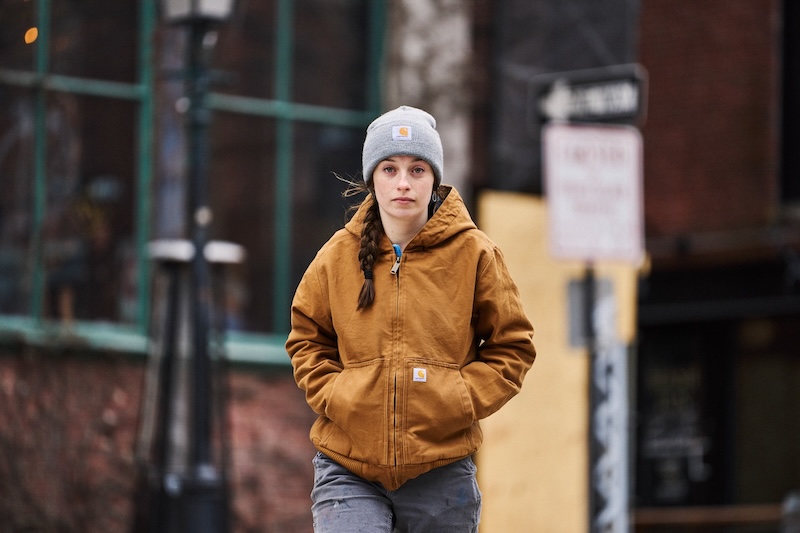
When the temperature drops, careful layering will keep you warm, dry and focused. Carhartt looks at how to choose the right fabrics and fits for your working day.
When winter bites, it’s easy to reach for a thick coat and hope it does the job. But staying warm and comfortable on site takes a bit more thought than just pulling on a bulky jacket. The real secret is building up layers of lighter garments that trap warm air inbetween.
Layering is more effective than relying on a single heavy piece of clothing as the air pockets between each item act like invisible insulation, holding warmth close to your body. If you start to overheat, removing a layer will release some of that trapped air, helping to regulate your temperature.
For tradespeople working outdoors or moving between warm and cold environments, this flexibility is essential. But proper layering isn’t about piling on clothes; each layer has a job to do and choosing the right fabrics can make the difference between a productive day and a miserable one.
Start with the base layer
Your base layer is the foundation of your winter kit. It sits next to the skin and manages moisture while keeping your temperature steady. A good base layer should be fitted just close enough to trap heat.
Cotton is often a popular choice as it’s soft and comfortable but it is not ideal. Cotton holds onto moisture; start sweating and a cotton t-shirt will quickly become damp, drawing heat away from your body and leaving you cold and clammy.
For anyone likely to work up a sweat, synthetic fabrics like polyester are a better choice. They’re lightweight, quick-drying and wick moisture away efficiently. Many modern synthetics are also designed for active use, helping to keep skin dry throughout the day. Synthetic fibres can develop odours faster than natural fibres, but there are options.
Carhartt’s Force range, for example, incorporates FastDry technology that fights sweat and dries fast but also has anti-microbial properties to prevent smells building up. The range covers everything from T-shirts and hoodies to trousers and socks.
Mid layers add warmth
The role of the mid-layer is to capture and trap any warmth your base layer failed to hold onto, while still allowing your skin to breathe. Fleece and flannel are great options here.
Fleece is lightweight, synthetic and impressively warm for its thickness. It dries quickly and retains warmth even if it gets damp. A fleece sweatshirt or zip-up top can be worn under a jacket or overalls, adding insulation without restricting movement. Flannel, made from brushed cotton or wool, offers warmth and comfort with enough breathability to prevent overheating. Its soft finish helps trap warm air close to the body, while still being durable enough for long working days.
Both fabrics have one major advantage: they are not bulky so give you freedom to move. Whether you’re climbing ladders, bending into tight spaces or loading tools, you’ll stay warm without feeling constricted or weighed down.
The outer layer finish
Your outer layer is the first line of defence against wind, rain and cold, so it must be tough, weather-resistant and comfortable.
Ripstop nylon and canvas are both excellent options. Ripstop uses a grid pattern of reinforced threads that prevent small tears from spreading, so it’s strong but surprisingly light. Canvas is incredibly durable and naturally wind-resistant, so is ideal for site work.
A waterproof outer layer is also key. Canvas isn’t naturally waterproof, but the thick, tight weave holds up well to light rain. Softshell jackets are good for milder days as they are windproof, shower-resistant and breathable. When temperatures drop further, an insulated or synthetic jacket provides extra warmth – just make sure it’s waterproof.
Carhartt’s Rain Defender technology helps water bead up and run off, keeping you dry in light rain. For heavier or prolonged exposure, Storm Defender adds a waterproof, breathable membrane that blocks external moisture while allowing internal vapour to escape.
Layering isn’t complicated and getting it right makes so much difference. While the kit you choose doesn’t have to carry a particular label, it’s worth choosing clothing designed specifically for the trade, such as Carhartt, for example.