Oliver Cripps, Head of Sustainability at Etex discusses how the UK is performing when it comes to the circular economy and what we can learn from the EU’s Circular Economy Action Plan.
It’s no secret that the construction sector is one of the largest consumers of raw materials.
But, if we are to move towards a more circular economy, this has to change.
To move to the next phase in our mission for a circular economy, we must look at Scope 3 emissions – these are indirect emissions that occur in the upstream and downstream activities of an organisation – and are the trickiest to manage because there are so many other factors in play. These emissions come from a variety of sources, such as the production and transportation of materials and waste disposal. This means that considering the impact your suppliers make – as well as ourselves and our clients – is critical.
Across the UK and Europe, many are exploring and implementing plans and blueprints that could help us to get closer to where we need to be. For example, the EU’s Circular Economy Action Plan (CEAP) covers several policy areas that would support the industry in creating systemic change and could be a valuable resource to those pushing for change – whether in the EU or not.
By considering how we tackle waste-to-landfill and protect natural resources by reuse, and recycling, we will be able to make a difference. And change can begin from anywhere, on any site and within any company.
Adopting CEAP principles
In the UK, architects have often been the drivers of sustainable material use, a circular approach and ensuring positive impacts on both the environment and society, with reputations skyrocketing among firms working on projects that push the boundaries of sustainability and innovation.
However, the wider construction industry is behind the curve. We need to operate as a collective to push harder and drive sustainable practice on a wider scale.
To do this we need an industry-wide plan that has enough breadth and ambition to inspire not only designers, but the whole supply chain, if we are serious about actioning change. This is why the UK could take inspiration from literature such as the EU’s CEAP.
The CEAP is all encompassing. It provides a holistic view of the circular economy by discussing strategies and methods of building such as modular construction, urban mining, and lean design – which ensures that materials remain in the loop longer and make buildings more future-proof. But on top of this, the CEAP shows that it is possible to bring together different aspects of sustainable thinking – material ingredients, issues around microplastics, reuse and refurbishment policies – into one single place. It shows how everything we do, and every material selection, is interconnected and therefore must be considered by any company, or person, operating within the sector that is serious about change.
However, zooming out a little, perhaps the biggest lesson the UK can take from CEAP is early adoption. The EU has laid down this guidance earlier than any other region, which will mean it will be implemented with more speed, at a larger scale.
While many in the UK are making moves towards more sustainable methods of material use, we are often guilty of operating in siloes. However, in order to truly close the loop and create a circular economy, we must be engaged from site to C-Suite. There is no other option.
Thinking beyond immediate emissions
To move beyond simply considering the waste we, as a firm or individual, are responsible for and, instead, make an impact on the sector’s overarching carbon emissions, we need to look at every phase of construction, every contributor in our supply chain and every building element. Which is why working in isolation will not produce results.
The CEAP aims to increase the consideration of scope 3 emissions via two key routes: designing sustainable products and considering the lifetime of said products. When considering elements that go into these, it starts with manufacturers (and their suppliers) but reaches through to the designer and main contractor, and then onto the end Client, building operator and beyond.
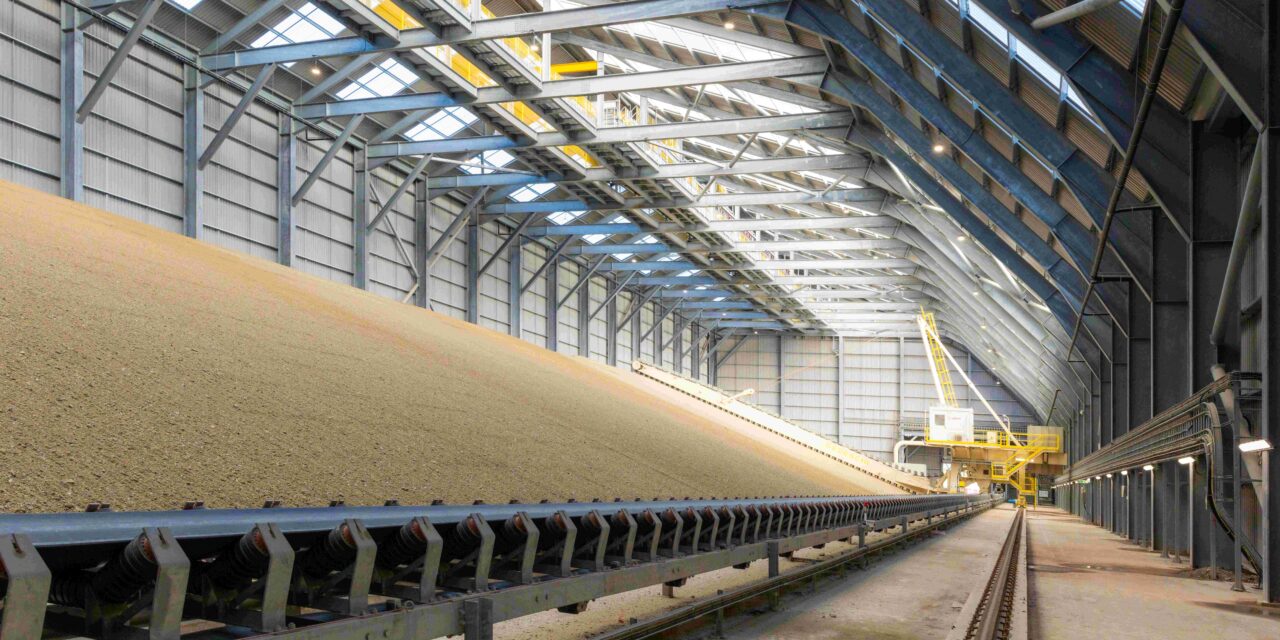
Starting at the beginning, as an example, one of the main components used in the manufacture of plasterboard is gypsum. Gypsum in itself is infinitely recyclable, but to recycle it, it needs to be collected and processed, not sent to landfill. This requires input from those on site, as well as manufacturers, to separate and collect gypsum waste before reusing the post-consumer gypsum to recycle into a brand-new building material. And, by doing so, we could vastly limit consumption of natural virgin resources.
At Siniat, we know how critical this element of material production is. In fact, we have recently invested millions into our new Bristol-based facility which contains a vast gypsum storehouse that will help us to store an increased amount of post-consumer gypsum to be reused within our products.
If we were all to adopt this mindset and invest the time and resource required, the industry could significantly decrease our usage of raw materials and truly switch to a model wherein lifetime carbon cost is considered.
Turning challenge into opportunity
We are all making changes to the way in which we specify, design, build and manufacture. But, to elevate our efforts, supply chain collaboration is key.
Taking the CEAP as inspiration, we can see how everyone – and every company – can play a part in limiting carbon impact of material use, specifying products with high recycled content, and decreasing waste. In the UK, we’ve already seen organisations adopting and taking inspiration from the CEAP. For example, the London Plan 2021 requires developments to have Circular Economy statements and the Welsh Government’s circular economy strategy, Beyond Recycling, outlines the country’s commitment to transition to a circular economy and deliver its aim of becoming a zero waste and net zero nation by achieving 70% recycling for waste from households, commercial and industrial businesses by 2025.
Cost, time and quality have always been markers of any successful construction project. However, moving ahead, sustainability must become one of those core metrics.
We have the tools, aspirations and knowledge to do better. So, while challenges lay ahead, we should see this as an opportunity to set a new standard of thinking, designing and building.
After all, we have no time to waste.
To find out more, visit www.siniat.co.uk/en-GB