Here, Calum Clark explores the most common UFH problems, and how to diagnose and fix them quickly and easily.
As the cooler weather sets in across the UK, underfloor heating (UFH) systems are switched back on and can reveal issues that have developed during the summer months. For heating engineers, this can bring a surge of service calls.
Before heading out, Ambiente always recommends a pre-visit triage where installers ask the homeowner a few quick questions, including whether the issue is affecting just one room or the whole system, if there are any unusual noises like gurgling or buzzing, whether the thermostat batteries are running low, and asking them to send a photo to show the current system pressure. This can save time upon arrival and may even avoid the visit if the issue can be fixed over the phone. If you do need to visit the customer, the first on-site job is to carry out a series of simple checks that save significant time and often indicate the source of the problem.
Flow and mechanical issues
A buzzing but non-vibrating pump is a common sign of a stuck impeller. In such cases, use a safe manual freeing method to restore operation. Sticking actuators or zone valves should be inspected by pressing the pin beneath the actuator and applying silicone spray or gentle pressure to free movement. Manifold leaks are another risk, especially after long idle periods, so always check compression fittings and O-rings.
Air, water and pressure
Where there are cold loops or gurgling sounds, trapped air is usually the main culprit and you need to purge the manifold ensuring every loop is clear. Boiler lockouts can be triggered by low system pressure, particularly below 1 bar, so top up the system carefully with the filling loop. Where cold spots are visible on thermal imaging,often indicating sludge or poor balancing, adjusting flow meters or scheduling a chemical flush can help restore efficiency.
Controls and sensors
When fault-finding, the wider system must be taken into consideration, too. While low batteries can cause wireless thermostat faults, always carry out wireless signal checks and floor probe readings to ensure everything is working correctly. Also check wiring centres to ensure all zones are correctly calling for heat and that the programming matches the homeowner’s schedule.
Ensuring long-term efficiency
Scheduling an annual service is critical to maintaining system efficiency, and always check system pressures (typically between 1-2 bar), bleed trapped air, and flush if water discolouration is present. When pressure testing, ensure 6 bar is maintained and monitor carefully for leaks. We also recommend asking homeowners to run the UFH system briefly during the summer months, even if heating demand is low, to prevent pump seizure. Balancing is a crucial step because an unbalanced system may cause hot and cold spots, or over/under heating in some zones. Adjust the manifold flow meters to match each circuit’s length and heat load requirements.
Core stock to keep in the van
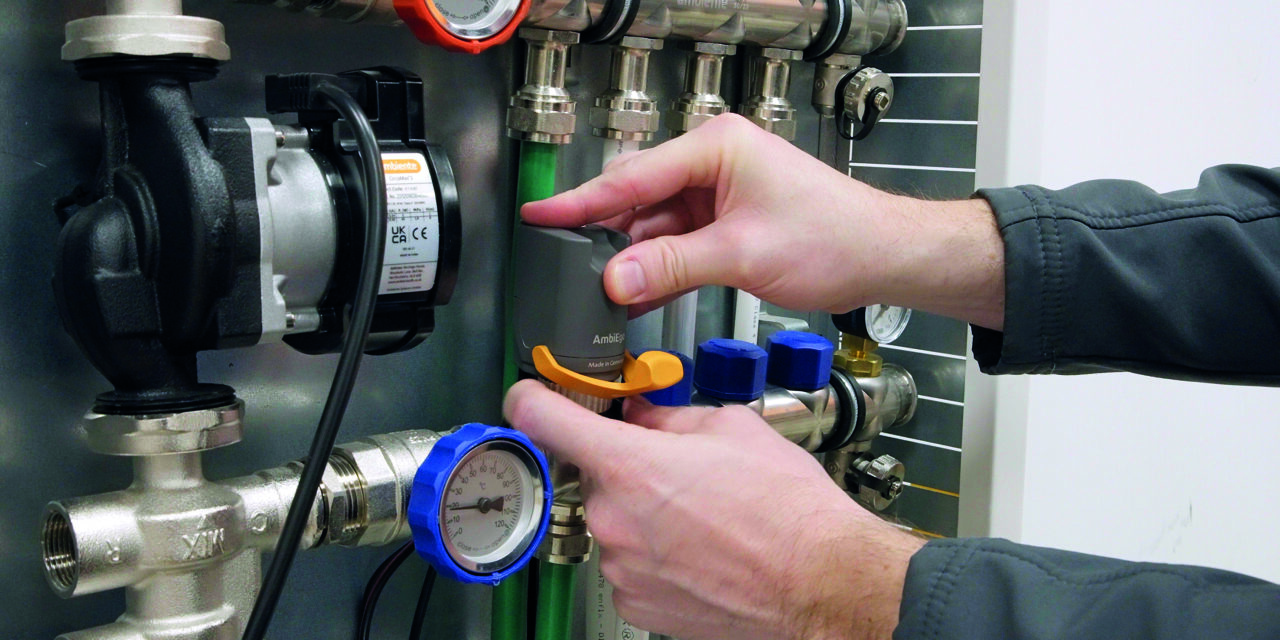
Having some core products in stock is crucial, whether during installation or to enable prompt repairs. One ‘hero’ solution is a self-balancing actuator, which removes the need for balancing and remedies the issue of hot and cold spots.
Using AI to provide the room just the flow it needs at the right time, products like AmbiEgo can help solve problems with an old system of if you lack prior knowledge of the original design. This handy bit of kit can take over, assess, and find a solution for the final (as-built) scenario and is a ‘must-have’ for engineers keen to resolve issues once and for all during call outs. And, it’s always helpful to have spare pumps on the van, specifically those set for UFH straight out of the box, such as the CircoMax 3.
Calum Clark is Product Support Specialist at Ambiente.
Autumn restart made easy: top tips for seasonal servicing
Here, Calum Clark explores the most common UFH problems, and how to diagnose and fix them quickly and easily.
As the cooler weather sets in across the UK, underfloor heating (UFH) systems are switched back on and can reveal issues that have developed during the summer months. For heating engineers, this can bring a surge of service calls.
Before heading out, Ambiente always recommends a pre-visit triage where installers ask the homeowner a few quick questions, including whether the issue is affecting just one room or the whole system, if there are any unusual noises like gurgling or buzzing, whether the thermostat batteries are running low, and asking them to send a photo to show the current system pressure. This can save time upon arrival and may even avoid the visit if the issue can be fixed over the phone. If you do need to visit the customer, the first on-site job is to carry out a series of simple checks that save significant time and often indicate the source of the problem.
Flow and mechanical issues
A buzzing but non-vibrating pump is a common sign of a stuck impeller. In such cases, use a safe manual freeing method to restore operation. Sticking actuators or zone valves should be inspected by pressing the pin beneath the actuator and applying silicone spray or gentle pressure to free movement. Manifold leaks are another risk, especially after long idle periods, so always check compression fittings and O-rings.
Air, water and pressure
Where there are cold loops or gurgling sounds, trapped air is usually the main culprit and you need to purge the manifold ensuring every loop is clear. Boiler lockouts can be triggered by low system pressure, particularly below 1 bar, so top up the system carefully with the filling loop. Where cold spots are visible on thermal imaging,often indicating sludge or poor balancing, adjusting flow meters or scheduling a chemical flush can help restore efficiency.
Controls and sensors
When fault-finding, the wider system must be taken into consideration, too. While low batteries can cause wireless thermostat faults, always carry out wireless signal checks and floor probe readings to ensure everything is working correctly. Also check wiring centres to ensure all zones are correctly calling for heat and that the programming matches the homeowner’s schedule.
Ensuring long-term efficiency
Scheduling an annual service is critical to maintaining system efficiency, and always check system pressures (typically between 1-2 bar), bleed trapped air, and flush if water discolouration is present. When pressure testing, ensure 6 bar is maintained and monitor carefully for leaks. We also recommend asking homeowners to run the UFH system briefly during the summer months, even if heating demand is low, to prevent pump seizure. Balancing is a crucial step because an unbalanced system may cause hot and cold spots, or over/under heating in some zones. Adjust the manifold flow meters to match each circuit’s length and heat load requirements.
Core stock to keep in the van
Having some core products in stock is crucial, whether during installation or to enable prompt repairs. One ‘hero’ solution is a self-balancing actuator, which removes the need for balancing and remedies the issue of hot and cold spots.
Using AI to provide the room just the flow it needs at the right time, products like AmbiEgo can help solve problems with an old system of if you lack prior knowledge of the original design. This handy bit of kit can take over, assess, and find a solution for the final (as-built) scenario and is a ‘must-have’ for engineers keen to resolve issues once and for all during call outs. And, it’s always helpful to have spare pumps on the van, specifically those set for UFH straight out of the box, such as the CircoMax 3.
Calum Clark is Product Support Specialist at Ambiente.