
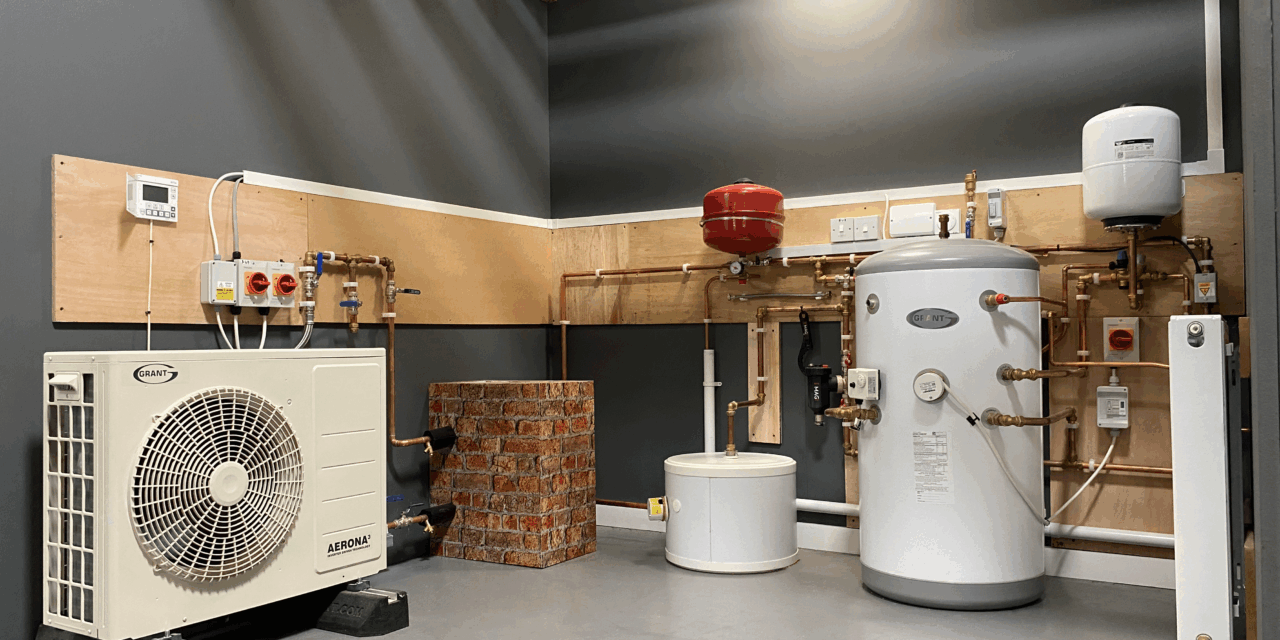
Mark Krull outlines the business opportunity for installers within the UK retrofit sector and explores how heating engineers can futureproof their skills in the move to net zero.
The UK’s journey to net zero is reshaping the heating industry and, for installers willing to adapt, the opportunities are substantial. With millions of older systems due for replacement and government targets accelerating the move away from fossil fuels, retrofit activity is set to dominate the next decade. The question is not if demand will grow, but how engineers can position themselves to meet it effectively.
Mapping the retrofit landscape
According to the latest English Housing Survey 2023-24, just 1% of homes (around 276,000) currently use a heat pump as their main source. New data from Aira also shows heat pump installations accelerating in 2025. With 86% of households still reliant on gas, the gap underscores the scale of change ahead.
Rural homes are leading this adoption, with 8% already using heat pumps compared with 0.5% in urban areas. Around 32% of rural properties still rely on oil, coal or wood-burning systems and, as traditional fuels become increasingly costly and unsustainable, these older, off-grid homes are prime candidates for low-carbon upgrades.
Heat networks are also expanding, with around 646,000 homes currently connected – predominantly flats in urban areas. Many existing heat networks operate on natural gas but will gradually shift to low-carbon sources such as large-scale heat pumps and waste-heat recovery. As cities develop new communal schemes, demand is also growing for installers skilled in Heat Interface Units (HIUs), plantroom installation and servicing, and large-scale HVAC and control systems.
Solar photovoltaic (PV) systems now feature in around 1.5 million homes (6%), rising to 11% in rural areas. As more homeowners look to make the most of their self-generated electricity, many are adding heat pumps, battery storage and smart controls to optimise efficiency and reduce running costs.
For installers, this growing interest in integrated, whole-home energy solutions presents a valuable opportunity to expand their services and future-proof their businesses.
The natural replacement cycle adds further potential: over 6.4 million homes (26%) have heating systems that are more than 12 years old – rising to 32% in rural areas – reinforcing the scale of the market ahead.
Building the right skills
Core skills required to work on heating include:
- Low-temperature heating and hot water system design – covers room-by-room heat-loss calculations, emitter sizing, pipework, flow rates and commissioning.
- Unvented hot water (G3) – teaches safe installation, servicing and fault-finding of unvented hot-water storage systems in line with Building Regulations.
- WRAS Water Regulations – provides understanding of the Water Regulations and by-laws governing system design, materials and backflow prevention.
These underpin every low-carbon installation and ensure systems perform efficiently once installed.
For experienced heating engineers the upskill course is Level 3 Air Source Heat Pump, which covers system design, sizing, installation, commissioning and maintenance, alongside the practical application of low-temperature heating design principles.
Real experience is essential and ‘Start at Home’ inspired schemes run by the likes of Grant and Alto Energy provide a free heat pump for newly qualified installers to fit in their own property, offering them a unique opportunity to gain hands-on practice before taking the technology to customers.
In general, partnering with a manufacturer is a good idea to access specific product training (which is usually free), technical support and, in some cases, MCS certification under an umbrella scheme.
Heat networks
As networks decarbonise, knowledge of large-scale heat pumps and control integration will be increasingly valuable.
Introductory Heat Network and HIU courses cover design concepts, pipework, insulation, servicing and control strategies, and many are supported by the Heat Training Grant, which subsidises up to £500 of course costs for eligible engineers.
Solar PV and integration
For installers looking to broaden into electrical renewables, courses in Solar Photovoltaic (PV) and Battery Storage Systems include DC design, inverter selection, protection, testing and handover. Combining PV and heat-pump knowledge enables installers to deliver whole-home energy systems that maximise self-consumption and cut running costs.
Making the transition
Moving into renewables doesn’t require the overhaul of an installer’s business – just a strategic expansion.
We would advise installers to focus on opportunities that match your customer base: off-gas areas suit heat pumps; urban engineers may target heat networks and those with electrical expertise can explore PV and battery systems. It’s also worth considering partnerships with other trades to offer complete retrofit solutions.
Get retrofit ready
Retrofitting is not a short-term trend; it is central to the UK’s decarbonisation strategy. Millions of homes will need new systems, and trained professionals will be essential in delivering them. Investing in accredited training today will position heating engineers securely within the retrofit revolution.
Mark Krull is Director of Logic4training.