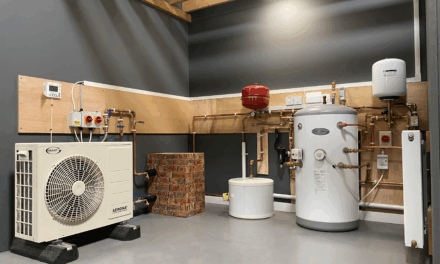

Chris Stammers advises why good hydronic underfloor heating design is crucial and the benefits an accurately planned system can deliver.
A well-designed underfloor heating (UFH) system delivers on every level, from efficiency to thermal comfort and design freedom. In contrast, one that is installed without any design or calculations carries many risks. As the pipework is usually inaccessible post-installation, issues such as cold spots and high running costs are challenging to solve once the system is fitted, so getting it right the first time is essential.
UFH has become a reliable solution for installers seeking to provide homeowners in all building sizes with the ideal balance of control over heat emitters, efficiency and comfort.
Today’s installers are tasked with delivering all of these benefits while adhering to the latest low-temperature update to Part L of the Building Regulations. This update requires newly built homes and even certain extended or majorly renovated properties to adhere to a flow temperature of no more than 55°C.
Taking every detail into account
Gathering details of key aspects of each room will allow for accurate heat loss calculations. Heat is lost through every surface, including floors, windows, roofs, and walls, and each aspect will differ from room to room, so specific data is needed for each space.
Then, additional site data is added to the design, such as the current or future heat source, sub-floor construction, and proposed floor coverings, including whether any floor probes are required to protect any heat-sensitive coverings or to future-proof the system.
Once these calculations have taken place and the site conditions are mapped out, it then clarifies how much heat each room loses and confirms the heat level the UFH system in that individual space requires, as well as the best way to meet this need while also achieving the highest possible efficiency.
Ease of installation
Having a plan to work from not only ensures a positive result but also allows for a smoother installation process. A reputable supplier that provides a CAD system design service will be able to provide drawings for the pipework installation, including pipe spacing measurements to achieve the desired heat output, and future-proofing to ensure system compatibility for a renewable heat source in the years ahead. It will also detail the most suitable manifold locations.
Calculating the materials needed for the installation ahead of time also reduces the amount of waste material, keeping costs as low as possible and giving installers a genuine competitive advantage. In addition, installers can rest assured that, when working with a specialist supplier, they have access to technical support at every stage, whether it’s confirming aspects of the pipe layout, commissioning or seeking additional support for homeowners when handing over the system.
Keeping it under control
A fundamental part of any UFH design is the controls, which ensure the property and zones within it are always at the right temperature at the right time. This, in turn, helps homeowners save money by avoiding energy wastage. Plus, zoning the system is not only an excellent way to achieve all of the above, but it’s also now a regulatory requirement for all newbuilds and some extension or renovation projects.
Working with the customer to consider how each room will be used brings controls specification and integration into the overall design, with choices ranging from simple dial-based electric UFH thermostats to intuitive, wireless thermostats that can ‘learn’ the most efficient programmes to achieve complete, energy saving comfort for the occupants. Controls are the only component of the system that the end user will interact with, so this vital finishing touch to the system design should be effortless to operate and manage.
Chris Stammers is Underfloor Heating Portfolio Manager for the BEAMA trade association.