Lee Parsons explains how installers can prevent frozen pipes this winter.
Frozen pipe callouts are an annual certainty for installers, but the good news is that much of the disruption is preventable. With the right advice and the right tools, they can help households avoid problems before they start, while ensuring they themselves are equipped to deal with emergencies efficiently and professionally.
UK homes are particularly vulnerable to pipe freezing because of our variable climate and the way many older properties were built. Pipes run through lofts, garages, outbuildings and external walls, and are often poorly insulated or even left exposed. When temperatures dip below zero, water inside those pipes can solidify, expand and block the flow. Left unchecked, the pressure build-up may rupture the pipe, unleashing a flood as soon as the thaw arrives.
For homeowners, the consequences can be severe; damaged plasterwork, ruined flooring, disrupted heating and costly insurance claims.
For installers, it often means frantic calls during the coldest months, long hours and emergency repair work that could have been avoided with a little foresight.
Many homeowners don’t give their plumbing a second thought until something goes wrong, which makes installer advice crucial. Encouraging insulation around vulnerable pipework, sealing draughts, keeping a low background level of heating in winter, or using smart controls to maintain steady temperatures can all dramatically reduce the risk. Outdoor taps, loft tanks and exposed runs are the areas most often overlooked, yet they are also the most likely to freeze.
Prevention, however, can only go so far. Traditionally, the default response has been to drain down the system. But anyone who has battled a stubborn stopcock, sluggish tank, or the risk of airlocks knows how quickly that ‘straightforward’ option can turn into a long and messy operation. Draining down is disruptive for the homeowner and time-consuming for the installer. In older or more fragile systems, the change in pressure may even cause new problems.
Freezing solutions
This is where professional-grade pipe freezing solutions prove their worth. By forming a solid ice plug inside the pipe, installers can isolate a section of the system in minutes, carry out a repair, and restore service, all without draining a drop more than necessary.
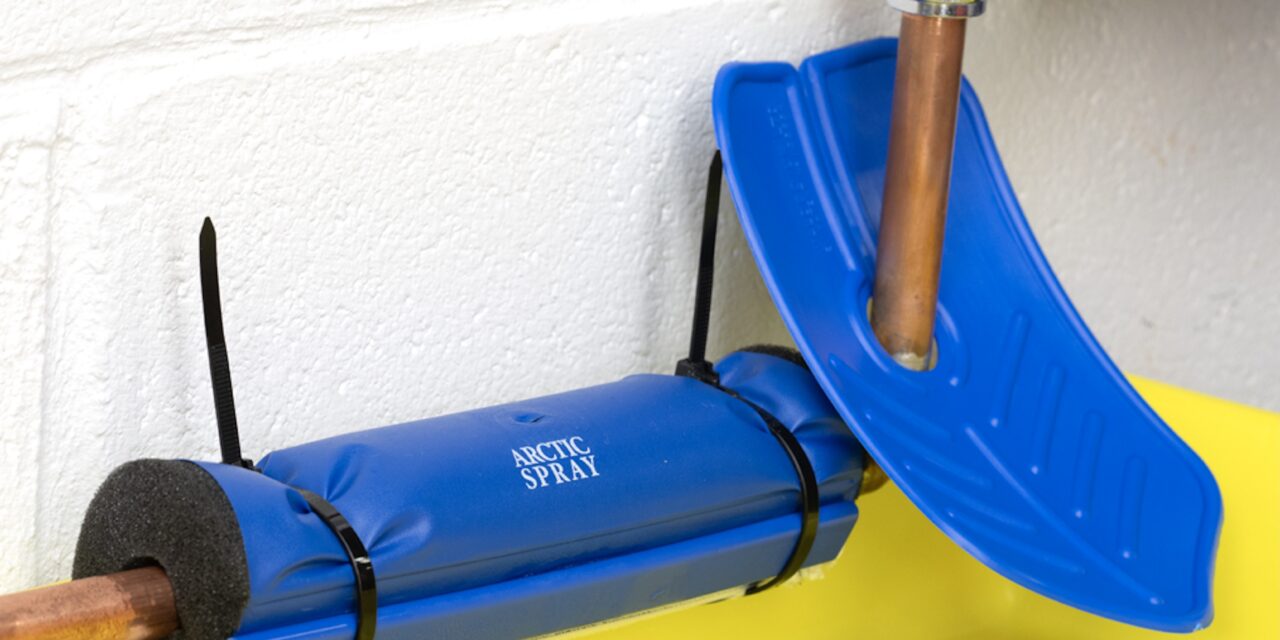
Modern freeze kits are far removed from the unreliable tools of decades past. Arctic Hayes’ pipe freeze kits for example, can create a secure freeze on a 15mm copper pipe in just a few minutes, producing an ice plug that holds pressures of up to 10-bar. That enables installers to work confidently, while saving hours compared with draining down the entire system.
For those who have never tried freezing before, the process is refreshingly straightforward. Preparation is key: cleaning and drying the pipe, stopping water movement where possible and allowing the correct freeze time all help ensure success. With those basics in place, today’s kits take the uncertainty out of the process, backed by clear step-by-step instructions and video demonstrations.
Once an installer has frozen a pipe on a couple of jobs, it quickly becomes a go-to method not only for emergencies but for planned maintenance too. The ability to isolate a small section of pipework in minutes transforms the way engineers work, giving them greater flexibility and control.
As we head towards another winter, installers are once again at the sharp end of frozen pipe prevention. Advising homeowners on insulation and heating habits remains the first line of defence, but when problems do arise, having access to freezing technology ensures repairs can be completed efficiently, cleanly and with confidence.
www.arctic-hayes.com/Catalogue/Pipe-Freezing
Lee Parsons is Managing Director of Arctic Hayes