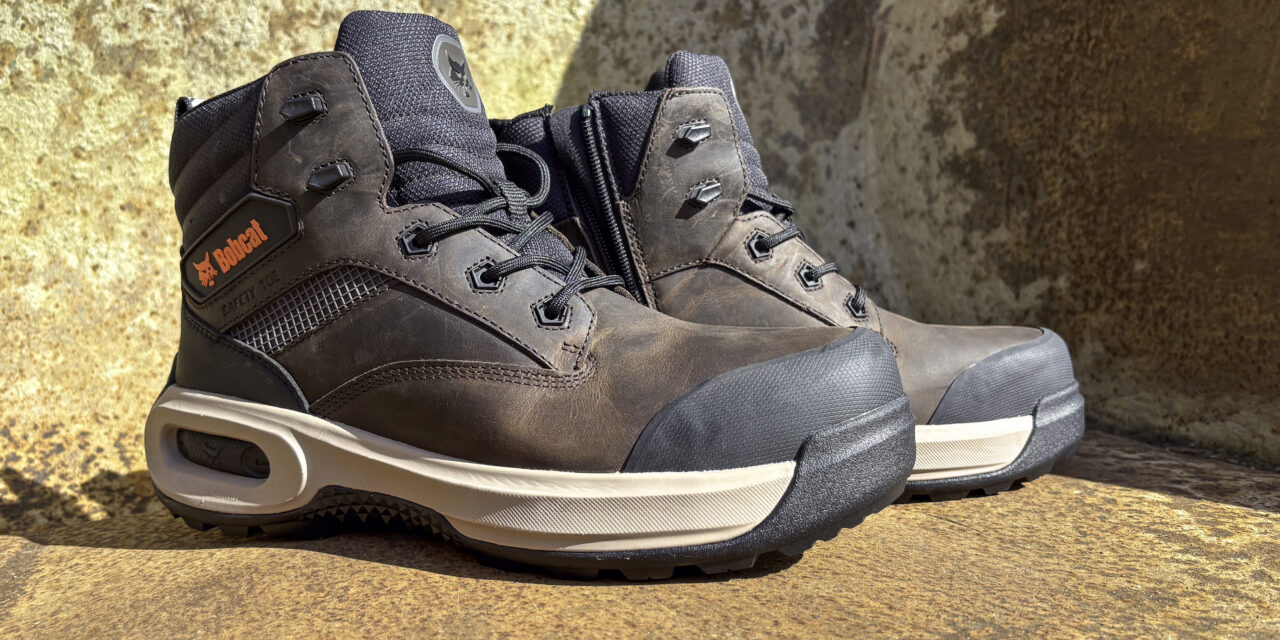
Peter Lawson explains the safety shoe ratings, codes and standards every installer needs to know before choosing their next work shoes.
Your safety boots are worn out, uncomfortable or simply past their best, it may be time for a replacement. But with so many styles, safety ratings, codes and standards to choose from, knowing where to start can feel complicated.
The first consideration should always be the safety rating. Your footwear needs to provide the right level of protection for the job, the working environment and your own individual requirements.
One standard you are likely to see regularly is EN ISO 20345:2022. This is the European standard for safety footwear and sets out the basic and additional requirements for products intended for general-purpose use. Any certified safety boot must be manufactured and tested to this standard.
The different ‘S’ ratings then indicate the level of protection and the specific safety features offered by the footwear.
- SB (Safety Basic) – Provides basic protection with a 200-joule impact-resistant toe cap. It is suited to lower-risk environments where protection from falling objects is the main consideration.
- S1 – Includes the same protection as SB, with the addition of anti-static properties, fuel oil resistance and energy-absorbing heels. It is suited to dry indoor environments such as warehouses and logistics facilities.
- S2 – Builds on S1 by adding water-resistant uppers, making it suitable for working environments where moisture, splashes or liquids may be encountered.
- S3 – Includes all S2 features, together with a penetration-resistant midsole. It is one of the most commonly specified levels of protection for construction, industrial and hazardous working environments.
- S4 – Combines S1 protection with a fully waterproof, leak-proof moulded polymer or rubber construction, commonly seen in Wellington-style boots. It is a practical option for agriculture and other sectors where heavy moisture is a regular issue.
- S5 – Combines S4 protection with a penetration-resistant midsole, making it suitable for wet and hazardous environments such as landscaping, agriculture and utilities.
- S6 – Introduced under EN ISO 20345:2022, S6 combines S2 protection with full waterproofing and is designed for demanding industries and wet working conditions.
- S7 – Also introduced under EN ISO 20345:2022, S7 combines S3 protection with full waterproofing, alongside enhanced resistance to impact, compression and sole penetration. It is intended for particularly demanding wet and hazardous environments.
Understanding the additional features
As trade sectors become increasingly specialised, so too do the working environments installers operate in. Safety footwear therefore needs to offer more than basic impact protection.
Modern safety boots can be designed to protect against a wide range of hazards, including sharp objects, high temperatures, difficult ground conditions and slippery surfaces.
Understanding these additional markings can help ensure the footwear you choose is not only compliant, but also suited to the specific demands of your role.
For example, S7-L, as featured on our Granite boots, provides all the benefits of S7 together with a non-metallic, penetration-resistant insert tested using a 4.5mm nail. This provides additional underfoot protection in demanding environments.
S3-S offers similar protection, using a non-metallic insert tested against a 3mm nail to provide resistance against thinner, sharper objects.
Other useful markings include:
- SC for scuff-cap resistance, as featured on our Omaha and Fargo ranges
- HRO for outsoles designed to withstand temperatures of up to 300°C for 60 seconds
- LG for ladder grip, as featured on our Dakota boots
The key is to consider the full requirements of your job, including the conditions you work in and the hazards you are most likely to encounter, before choosing the most appropriate footwear.
The importance of gender-specific fit
Fit should also be an important part of the decision-making process.
Women’s feet are anatomically different, which means women’s safety footwear should be designed specifically for them rather than simply being a smaller version of a men’s boot.
As more women enter the trades, manufacturers are increasingly developing purpose-built ranges that provide a more appropriate fit while improving comfort and safety on site.