Installers looking to capitalise on the latest air source heat pump technologies need to know the advantages of new refrigerants on the market, such as R290. Laetitia Mace explores how R290 differs from other refrigerants and how installers can take advantage of the business opportunities it opens up.
Heat pumps require refrigerants to absorb heat from the outside air and move it into the main system. R290 is a refrigerant with a boiling point of -42.1°C which therefore evaporates at very low temperatures. This low boiling point is what makes it so effective at absorbing heat from the air, which means R290 is perfectly suited for ASHPs.

The efficiency edge
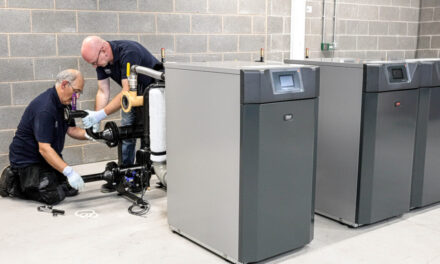
Due to its efficiency at absorbing heat R290 systems require less refrigerant, so monobloc set-ups are commonly used. These are simpler to install and maintain and, for installations using R290, installers can focus on wiring and commissioning rather than refrigerant handling.
Responding to demand
Working with R290 requires specific training and, with rising demand for heat pumps, there is strong motivation for engineers to put themselves on a course. Indeed, over 1,000 engineers attended one of Baxi’s ASHP training courses last year.
This increase in installer training, and the emphasis given to heat pumps in the Warm Homes Plan, paints a clear picture of the growing ASHP opportunity.
Installers who want to seize the opportunity in front of them can attend Baxi’s three-day BPEC ASHP course. This looks at design, installation, commissioning and servicing, and is followed by a formal assessment. The Baxi Heat Pump Installer (BHPI) course is also available and covers system design, installation requirements and fault-finding. BHPI-qualified installers can directly commission Baxi ASHPs, register installations on Baxi Works and offer customers an enhanced warranty. Installers who complete the BHPI course receive free supervised commissioning for their first ASHP installation.
Enhanced assistance
While heat pumps as a technology have been around for many years, as a household heating system in the UK they are still relatively new. Because of this, there can be a significant difference in understanding and experience between different engineers. Baxi has a raft of support available for engineers at every stage of their heat pump journey, from the recently launched MCS umbrella service to technical support.
Baxi’s MCS Umbrella Service offers nationwide on-site support from experienced ASHP engineers, a free initial enquiry, heat-loss surveys, system design and commissioning, and MCS-compliant documentation. It also makes access possible for government incentives such as the Boiler Upgrade Scheme (BUS). Engineers can be confident that they will have assistance at every step, whether installing their 50thASHP, or starting to familiarise themselves with the technology. They can relay that confidence to customers as they discuss potential ASHP projects.
Selling strengths
Lower costs can be a major selling point, and many homeowners are equally interested in reducing their environmental impact. Discussing R290’s low Global Warming Potential (GWP) can be seen as another strong benefit.
GWP is a metric comparing greenhouse gases and scoring them based on how long they stay in the atmosphere and how much heat they absorb. A higher GWP means a bigger environmental impact. R290 has an ultra-low GWP of just three. Compare this with R410A – another commonly used ASHP refrigerant – which has a GWP of 2,088, and we can see the strong environmental benefits of using an R290 ASHP.
R290 ASHPs can be used in commercial and residential settings. Baxi manufactures the Auriga HP+ for commercial applications, and the recently launched HP60 is designed from the ground up with the residential market in mind.
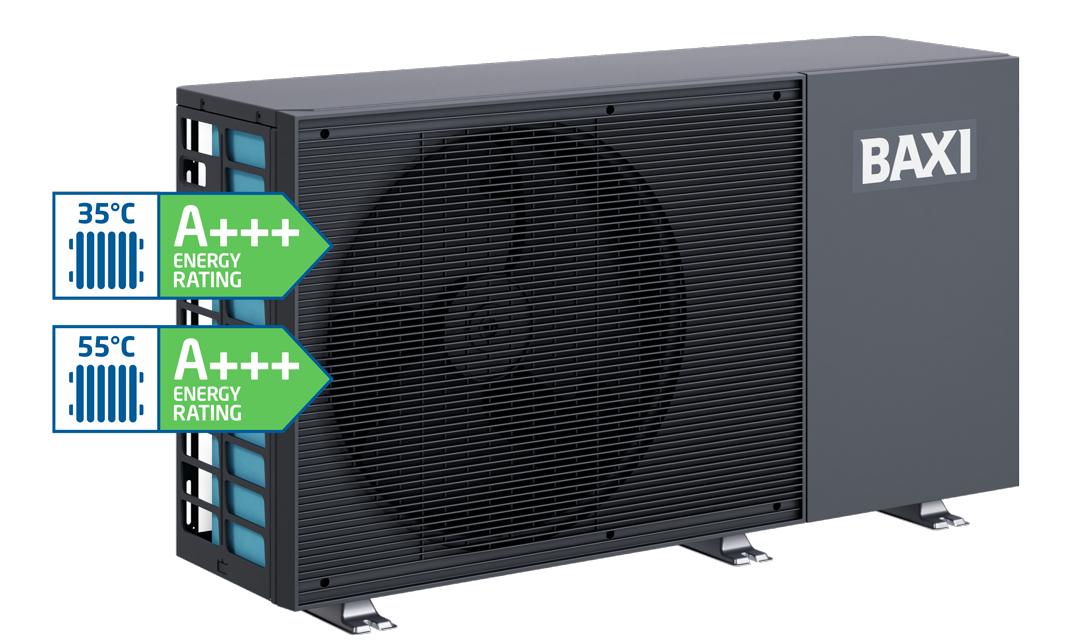
The HP60 is A+++ rated at 35°C across the range and at 55°C for those up to 8kW. This makes it one of the best-performing ASHPs on the market. Added to which, the R290 allows the heat pump to provide 75°C water temperature at outside temperatures as low as -10°C, perfect for the legionella cycle in your cylinder. This broadens the range of properties already suitable for ASHP installation and significantly increases the number of potential projects installers can pursue.
Delivering quality heat and hot water
R290 marries environmental performance with on-the-ground advantages. The technical benefits, combined with the ability to keep customers comfortable, suggests that R290 will soon be the preferred option for installers and homeowners.
By undergoing the right training and embracing manufacturer support, engineers can deliver efficient heating solutions across a wider range of properties while keeping safety, sustainability and compliance front of mind.
Laetitia Mace is Residential ASHP Portfolio Expert at Baxi.