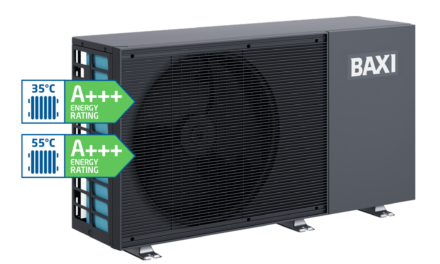

Darren Smith considers the role installers can play in explaining a variable tariff system to homeowners keen to use heat pumps and hybrid systems.
Demand side response (DSR) is designed to offer cheaper electricity to users during times of low demand. The idea is to even out peaks in demand with the incentive of lower bills for homeowners.
Homeowners can capitalise on these rates by running their heating during low tariff periods and then turn the heating off, relying on good insulation and thermal mass to keep the house warm during the day.

Increasingly, households with heat pumps installed are taking up the approach suggested by DSR or cheaper tariff times, and are starting to treat their systems like boilers, fully running them when electricity is cheap and shutting them down during peak rates.
This is not a good way to use heat pumps, and homeowners need to understand how to get the very best performance from the technology to avoid becoming disenchanted with it.
Perceived inefficiency
It is all too common for homeowners on a flexible tariff or DSR-style schedule to become disappointed with their heat pump’s performance or running costs. It’s not the technology that’s the issue, but how it’s used.
Heat pumps rely on consistency, not frequent cycling. Every time the system is forced to stop and start, the heat pump loses thermal stability.
To recover, it must operate at a much higher temperature, which places additional stress on the compressor, shortens equipment life and could potentially triggers additional callouts.
In short, the “stop-start” approach of DSR can work against ensuring optimal heat pump performance.
Making an impact: how to manage expectations
Helping the homeowner understand more about the way their heat pump operates is key. The main advantages of heat pump performance are based around efficiency and sustainability – installation will not necessarily lower energy bills in the short term. Electricity remains more expensive per kWh than gas, which means cost savings rely heavily on how the system is used.
Revisiting the commissioning settings of a heat pump may improve things. Resetting flow temperatures, ensuring emitters are correctly sized for low-temperature operation and enabling weather compensation can make a substantial difference. The objective is to get the best performance from the system and prevent homeowners “tariff chasing” – a process that undermines heat pump optimisations.

The practicality of a hybrid system
A hybrid system, on the other hand, can give homeowners the best of both worlds; pairing a heat pump with a gas boiler, which can automatically switch between energy sources depending on outdoor temperature, running cost, or when cheaper tariffs are available.
Alpha has a range of hybrid systems that use intelligent controls to determine in real time which heat source to use for the best efficiency and comfort. It allows homeowners to take advantage of cheaper electricity rates when available, while also providing peace of mind that the boiler can provide instant heat or top up during high demand.
What’s next for demand side response?
DSR will evolve over time as the UK transitions to a low-carbon grid. What’s needed is a smarter, more dynamic system of load management that complements heat pumps rather than working against them. In the meantime, installers can bridge the gap by setting expectations, refining heat pump systems and potentially suggesting the option of hybrid systems to match expectation to performance.
Darren Smith is Technical Manager at Alpha