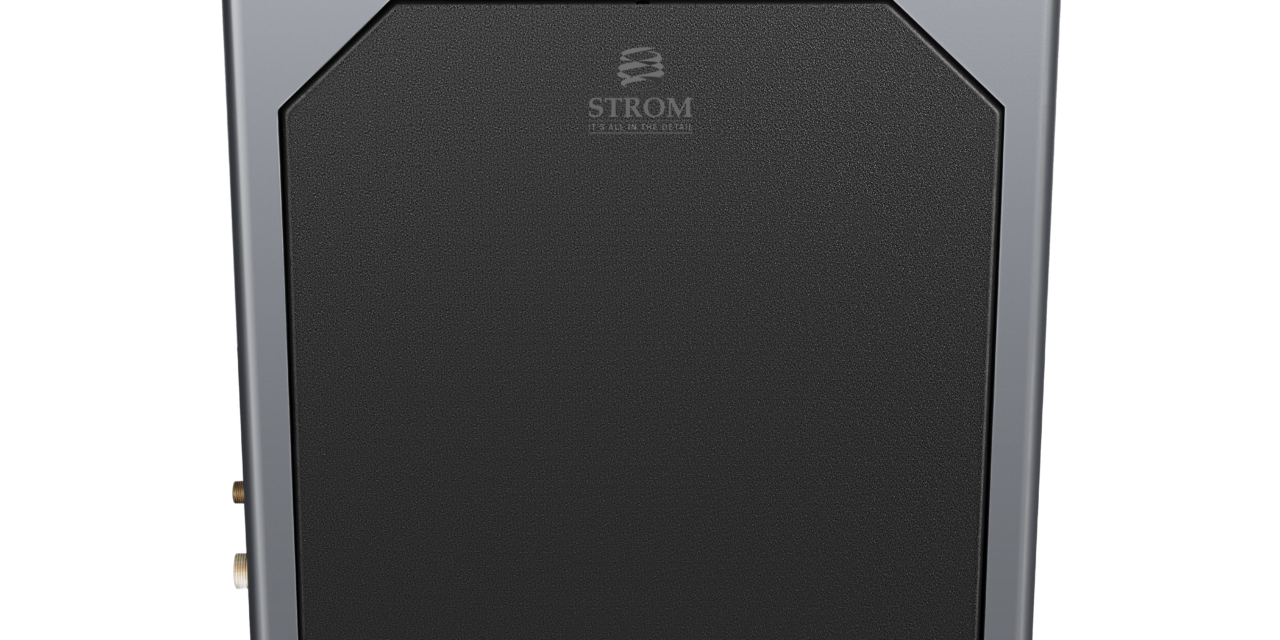
STROM is tackling the UK’s retrofit challenges with a fresh approach to heat pump design.
The conversation around low-carbon heating often centres on newbuild homes, where space and design constraints can be addressed from the outset. Yet the reality for much of the UK housing stock is very different. Terraced homes and compact gardens all create practical barriers to homeowners making the switch from fossil-fuels.
For electric heating specialist STROM, these real-world constraints have been a starting point rather than a limitation. Known as a water heater specialist, the business has now launched heat pump technology designed specifically to address these retrofit challenges.
First shown as a prototype at InstallerSHOW 2023 and officially launched in December 2025, STROM’s Vertex heat pump range takes a different approach to airflow, installation, and system control, with a design shaped by installer experience and feedback.
Siting flexibility
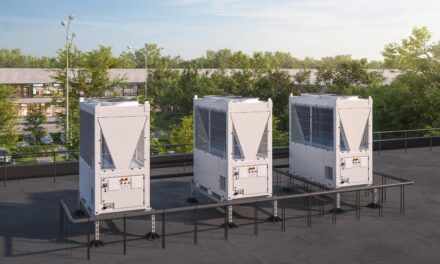
One of the most distinctive elements of the Vertex monoblock air source heat pump is its upward-firing airflow. While vertical discharge is common in large commercial heat pump systems, it is rarely seen in domestic applications.
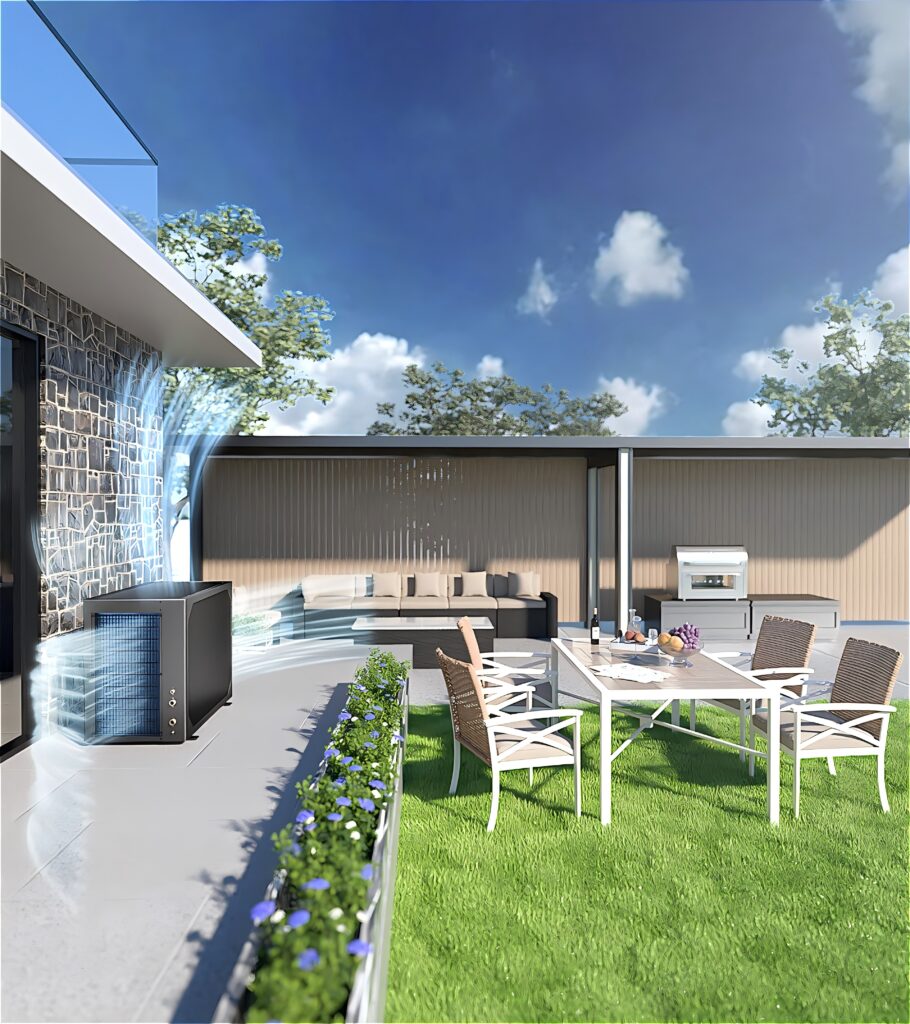
Chris Johnston, who leads product development at STROM and who started his career as a heating engineer, explains: “With a forward-firing unit, cold exhaust air can hit a wall or a fence and then recirculate back into the unit. That creates a micro-climate which reduces efficiency. Ours constantly draws in fresh air instead.”
These practical benefits go beyond system performance. In gardens where space is limited, forward-blowing cold air can affect planting, patios, and usable outdoor areas.
Chris adds: “I spoke to a homeowner who was disappointed she couldn’t put anything in front of her heat pump because the cold air killed the plants. With this design, you don’t get that.”
By directing airflow upwards, the unit can be positioned closer to boundaries, screened with fencing, or integrated more sympathetically into landscaped spaces. For many homeowners, that flexibility can be the difference between proceeding with a heat pump installation or ruling it out entirely.
The reality of retrofit
If heat pumps are to replace gas boilers at scale, retrofit installations will play a decisive role.
Pete Diamant, STROM’s European Sales Director, says: “If heat pumps are going to replace gas boilers, we’re talking about well over a million installations. Most of those homes don’t have the space down the side of the house or in the garden for a traditional forward-firing unit.”
The Vertex range is positioned to address that challenge directly. By reducing siting restrictions and minimising the impact on outdoor spaces, STROM believes upward-firing heat pumps could unlock more retrofit opportunities across dense urban housing and older properties.
From the installer’s perspective
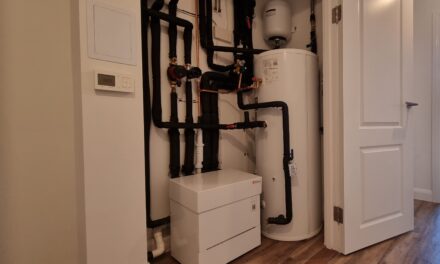
The Vertex heat pump offers a simple, two-pipe, single-cable installation for the outdoor unit, supported by a centralised internal wiring centre developed in-house. Everything is designed to return to one location, reducing complexity and time on site.
Access and servicing have also been prioritised. The evaporator is three-sided, and all major components, including controls and compressor, are accessible from a single front panel, influenced by Chris’ own experience as an engineer.
“If you need to work on it, everything is there. You’re not dismantling half the unit to reach one component,” he says.
There is also an external drain point for servicing and a pressure relief valve located on the outdoor pipework, reducing the need for additional internal routing and wall penetrations.
STROM chose a Danfoss heat exchanger to ensure higher efficiency and long-term reliability rather than low-cost compliance. Trace heating has also been added into the base of the chassis to prevent condensation build up, an issue that can affect outdoor units during the winter.
Chris adds: “Condensation happens in all heat pumps [but] there are only a handful of manufacturers that deal with it properly. We addressed it from day one.”
The Vertex heat pump delivers seasonal Coefficient of Performance figures of around 4.8 to 4.9 across much of the range. The system also includes a room auto-adaptation function that works alongside weather compensation to fine-tune output based on real internal conditions. The heat pump can then reduce flow temperature to prevent overshooting and cycling.
Up to two thermostats can be linked to the main controller, allowing separate monitoring of different floors, while communication with the app ensures consistent data across the platform.